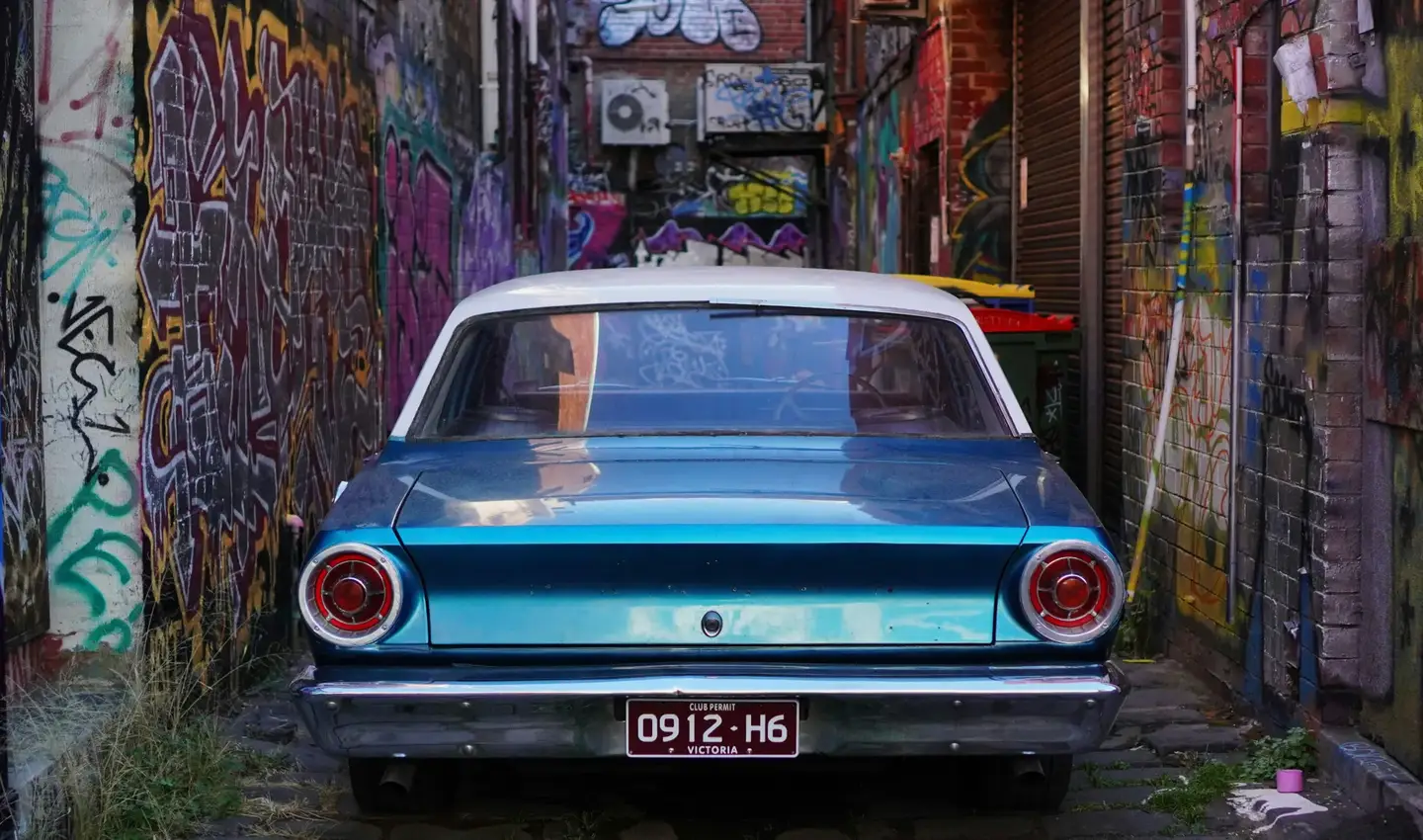
How to get a club permit in Victoria
Five stages, three parties. You supply the vehicle and the roadworthy, Club Plate Co signs the club paperwork online, and VicRoads issues the permit, plates and logbook at the counter. Here is exactly who does what, and when.
Updated 5 September 2026. Written and checked by Sam and Riley, the named officials who run Club Plate Co.
Who does what
Every club permit application involves three parties, and most confusion about the process comes from mixing up which one owns which step.
- VicRoads runs the scheme. It decides whether a vehicle gets a permit, sets every fee, issues the plates, the logbook and the certificate, and writes the rules you follow afterwards.
- The club has one narrow job: confirm you are a financial member and sign the club section of your paperwork. Club Plate Co is one of the clubs VicRoads has approved to do that. A club cannot issue a permit, waive a rule or set a fee.
- You supply the vehicle, the roadworthy certificate, the evidence and the trip to the counter.
| Stage | Whose job it is | What it involves |
|---|---|---|
| 1. Join an approved club | You, then us | You sign up online; we check the vehicle against the scheme rules |
| 2. Roadworthy certificate | You and a licensed tester | Only a licensed tester can issue it — no club can |
| 3. Photos and vehicle details | You | Upload the compliance or build plate and the vehicle, from your phone |
| 4. Club endorsement | Club Plate Co | Our authorised officer signs the declaration and the club section |
| 5. Lodge and pay | You and VicRoads | A counter visit; VicRoads issues the permit, plates and logbook |
The part we have changed is stage four. Traditionally you would attend meetings, wait for a scrutineering day and get a signature in person. With us that stage is online: photographs and documents in, endorsed forms back.
Five steps, in order
Step 1 — Join an approved club
VicRoads will not accept an application from someone who is not already a member of an approved vehicle club or association, so this comes first rather than last. Any club on that list can endorse the permit, and the three kinds of Victorian car club differ mainly in what they ask of you before they will. Club Plate Co membership is $99 a year, bought online in a few minutes, with no meetings, no runs and no attendance requirement. Before you pay, we check the vehicle against the scheme’s eligibility rules — the build date, the VIN, the write-off register — and tell you if something will not work.
Step 2 — Get a roadworthy certificate
A vehicle built on or after 1 January 1949 needs a current certificate of roadworthiness. Only a licensed vehicle tester can issue one; no club can, ours included. The certificate is valid for 30 days, so book it close to when you intend to lodge rather than months ahead.
A vehicle built on or before 31 December 1948 is exempt, and so are street rods, light trailers and plant-based special purpose vehicles. For those, a club official inspects the vehicle and declares it safe for road use instead.
You do not have to wait for the roadworthy to start with us. An application opens without it and sits until the certificate is uploaded.
Step 3 — Send us photos and the vehicle details
This replaces the drive to a scrutineering day. From your phone, upload:
- the Australian compliance plate or build plate, legible, with the build date visible;
- the VIN or chassis number where it is stamped on the vehicle;
- the vehicle itself — front, rear and both sides;
- any VASS approval certificate or modification paperwork you already hold.
For a vehicle not made for the Australian market, add the Vehicle Import Approval or the Register of Approved Vehicles entry instead of the compliance plate.
Step 4 — Club endorsement
Our authorised officer signs two documents, both by their official VicRoads names:
- the Vehicle eligibility and standards declaration for club permit vehicles, which states the vehicle meets the standards and is safe for the road network; and
- the club section of the Club permit application.
Both come back to your account, signed. Two clocks start here: you have 30 days from the date on the declaration to lodge, and your roadworthy certificate is separately valid for 30 days from its own issue date. Whichever expires first, expires the application.
Step 5 — Lodge at VicRoads and pay
Take the paperwork to a VicRoads Customer Service Centre. The vehicle does not need to come with you. Bring the original signed application and declaration, proof of identity, the original roadworthy certificate if the vehicle was built after 1948, the compliance or build plate evidence, any VASS certificate, and payment. At the counter you choose 45 or 90 days and pay the permit, plate and logbook fees.
Which office to use depends on where you live; the town pages list the nearest one and its address.
What you walk away with
If everything is in order, VicRoads issues the permit on the spot. You leave with four things:
- Club permit number plates — white characters on a maroon background with “club permit” along the top. Handed over immediately if that office has them in stock, otherwise posted to you.
- A logbook — where you write each day of use before you drive.
- A club permit certificate — which lives inside the logbook’s cover.
- A windscreen label — attached to the vehicle so the permit is visibly current.
From then on the rules are yours to keep: log every day, stay a financial member, tell VicRoads within 14 days if the vehicle’s details or garage address change, and renew each year. The rules and logbook guide covers all of it.
How long each stage takes
Two of the five stages are genuinely quick, and two depend on someone else’s diary. Rather than quote an average we cannot stand behind, here is what is fixed and what is not.
- Joining and uploading — minutes, whenever suits you. There is no waiting period and no probation before your membership counts.
- The roadworthy — set by the tester’s booking diary, and the usual bottleneck. Book it first and build everything else around it.
- Our endorsement — starts once your documents and membership are in, and your signed declaration comes back within one business day.
- The VicRoads visit — a single counter transaction, and the permit is issued the same day if all requirements are met.
The two 30-day clocks in step four are the only hard deadlines. Miss either and you reapply, so lodge in the same fortnight your paperwork comes back.
Coming off full registration
A vehicle holds full registration or a club permit, never both, so a switch means cancelling the registration. Do not cancel before you are ready: an unregistered vehicle cannot legally be driven to the roadworthy test, and you would need an unregistered vehicle permit to move it.
The workable order is: join, get the roadworthy while the vehicle is still registered, get the endorsement, then cancel the registration and lodge the club permit application. Where a vehicle is currently registered somewhere other than Victoria, VicRoads requires the old number plates to be returned to it.
Cancelling early is not money thrown away. VicRoads: “You may be eligible for a refund if you cancel your registration before it expires. The refund covers the time left on your registration.” Two deductions come off it — a $22.10 processing fee and 10% of the TAC fee — and if the refund is smaller than those, you get nothing. VicRoads also wants evidence of the plates: a photo of them destroyed, cut in half, or a statutory declaration explaining why you do not have them. A refund is paid into your bank account within 10 business days. The rules are on the VicRoads cancel vehicle registration page, which sets them out for registration generally and does not mention club permits.
Already on a permit with another club and want to move? That is a different, shorter process — changing clubs keeps your existing plates and permit, provided the gap between memberships is no more than 14 days.
How the process works: your questions
How do I get a club permit from VicRoads?
In five steps: join a VicRoads-approved club, get a roadworthy certificate if the vehicle was built after 1948, send the club photos and the vehicle’s details, have the club sign the declaration and application, then lodge both at a VicRoads Customer Service Centre and pay. VicRoads issues the permit, plates and logbook at the counter.
How do club permits work in Victoria?
A club permit is an alternative to full registration for eligible historic vehicles. Instead of paying for a year of unlimited use, you pay for 45 or 90 days of use a year and record each day in a logbook before you drive. The vehicle carries club permit plates, and the permit stays valid only while your club membership does.
How does a club permit work day to day?
Write the date in the logbook before you drive more than 100 metres from the garage address, then drive. One entry covers the whole day for the first driver, and you can drive anywhere in Australia on a logged day. Trips spanning midnight need an entry for each day, and you cannot write entries in advance.
How do I get club rego in Vic?
Join a VicRoads-approved club, get a roadworthy certificate, have the club sign your eligibility declaration, then lodge the club permit application at a VicRoads customer service centre. Club rego is the everyday name for that permit, so those five steps are the whole process however you phrase it.
How to get club registration in Victoria?
“Club registration” and “club rego” both mean the club permit, so the process is the one on this page. VicRoads only uses the word permit, which matters when you are searching its site or filling in a form: look for the Club permit application, not a registration form.
Start whenever it suits. Pay only when everything’s in.
Your classic deserves to be driven. Begin your application now and it waits for your roadworthy — we don’t charge you until it’s all in hand. Not sure you’re eligible? It’s just the build date: 25 years or older and you’re in.